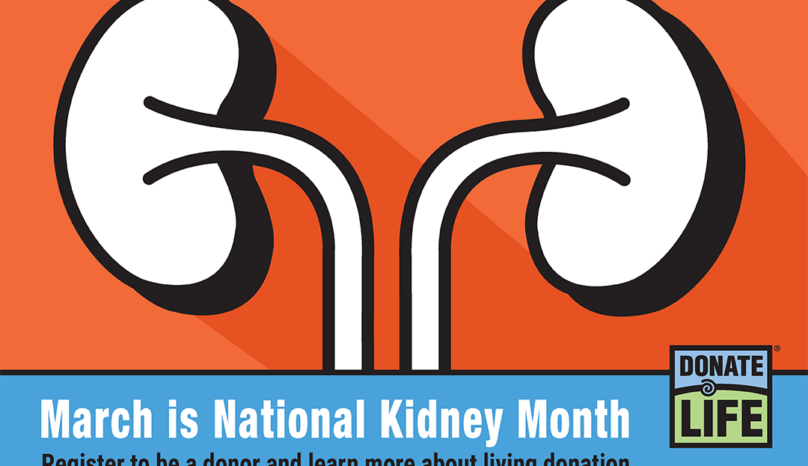
March is National Kidney Month, a time when Americans are asked to focus on a disease that quietly affects millions of people across the country. Nearly 40 million Americans are living with kidney disease, and more than 700,000 people are already experiencing kidney failure.
Even more concerning, 1 in 3 American adults is at risk for kidney disease.
Take a moment and look around. In a room of three people, one may already be on the path toward kidney disease without knowing it.
Kidney disease often develops slowly and silently. Many people feel completely normal in the early stages. There may be no pain, no clear warning signs, and no reason to suspect anything is wrong. By the time symptoms appear, the damage can already be severe.
Why kidney disease is rising
Kidney disease is closely connected to some of the fastest-growing health challenges in the United States. Two of the leading causes are diabetes and high blood pressure, both of which place significant stress on the kidneys over time. As obesity rates rise, particularly among children, doctors are seeing more cases of type 2 diabetes at younger ages.
Researchers estimate that 1 in 3 children will develop diabetes during their lifetime. That matters because diabetes is one of the most common causes of kidney failure. The kidneys serve as the body’s natural filtration system, removing waste, balancing fluids, and helping regulate blood pressure. When they begin to fail, toxins build up in the body and patients may eventually require dialysis or a transplant to survive.
The most common transplant
Kidneys are also the most commonly transplanted organ in the United States. Yet the need for kidney transplants far exceeds the number of organs available.
Today, nearly 90,000 people in the United States are waiting for a lifesaving kidney transplant. Behind every number is a person, a family, and a story.
Paul’s story: Five years of waiting
For Paul, the journey to transplant began with something many Americans face: high blood pressure and prediabetes. Those conditions eventually led to chronic kidney disease. Then, during a routine checkup, doctors found something suspicious.
An MRI revealed renal cell carcinoma in his left kidney.

“At first, I was shocked to hear the word ‘cancer,’ but I took it in stride,” Paul said. “I told myself, ‘I’ve lived a great life, and if it’s my time, I’ll face whatever comes.’”
Doctors diagnosed him with two types of cancer, and his treatment options were limited. Because the tumor was growing quickly, surgeons performed a radical left nephrectomy, removing the entire kidney. It was only the beginning of a long and difficult journey.
After surgery, Paul spent four years on dialysis while his remaining kidney function declined to just three percent. Dialysis became part of daily life.
“Three times a week, four hours per session, after an eight-hour workday,” he said.
Despite the routine and the uncertainty, Paul stayed focused on his family.
“I had young kids, a wife who loved me, and a desire to see my family grow,” he said.
Dialysis was keeping him alive, but he knew it was not a permanent solution.
“Without a transplant, I might have had seven to eight years left, assuming my health held up.”
Then the moment every transplant patient hopes for finally arrived. On December 13, 2024, Paul received the call that a donor kidney was available.
“After five years on the transplant list, I had almost given up hope, and suddenly here was my chance,” he said.
The call came quickly and there was little time to process what was happening. But one thought stayed with him.
“The first thing I thought of was the donor and their family,” Paul said. “They had just lost someone they loved.”
Two days later, Paul received his kidney transplant. The donor was a man named Gabriel.
“The transplant has given me a second chance at life, and I will forever be grateful to Gabriel and his family,” Paul said.
Today, Paul is committed to honoring that gift by raising awareness about organ donation.
“You never know when you might give someone the gift of life,” he said.
What you can do this National Kidney Month
National Kidney Month is an opportunity to take simple steps that can protect your health and potentially save someone else’s life. First, know your risk. People with diabetes, high blood pressure, or a family history of kidney disease should talk with their doctor about screening.
Second, get tested. Routine blood and urine tests can detect kidney disease early, often before symptoms appear.
Third, protect your kidney health through healthy habits such as maintaining a healthy weight, managing blood pressure, and staying active.
Finally, consider registering as an organ donor. For the nearly 90,000 people waiting for a kidney transplant, that decision could one day mean the difference between life and death.
This March, during National Kidney Month, take a moment to think about your own kidney health. Because for millions of Americans, the future may depend on it.